Swiss Art Expo 2025: qargo's LEGO® tribute to Masahiro Hara
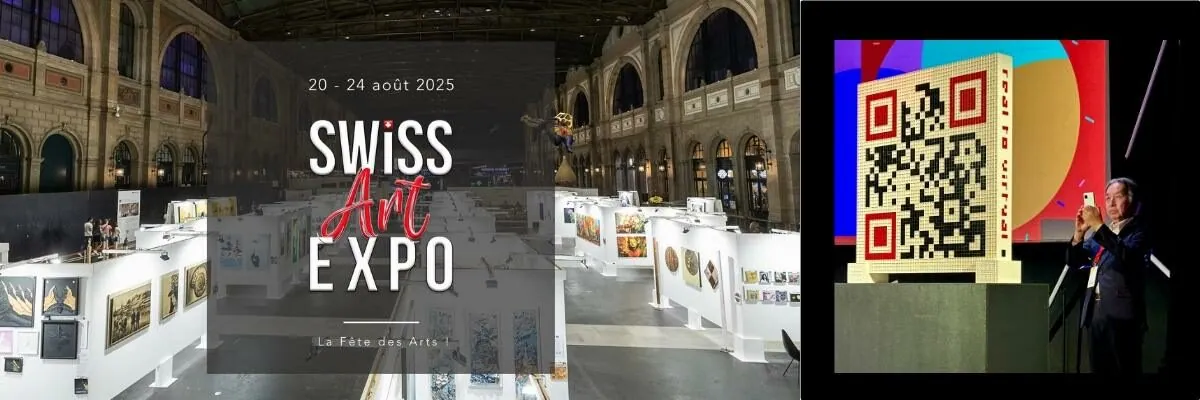
The 2025 edition of the Swiss Art Expo was held from 20 to 24 August in Zurich's main railway station, welcoming tens of thousands of visitors daily, free of charge. Among the invited artists, the LEGO® artist qargo presented his work The Architect of the Invisible, continuing a career already noted in several international exhibitions.
A tribute to Masahiro Hara, inventor of the QR code
Created in LEGO®, The Architect of the Invisible is above all a tribute to Masahiro Hara, the inventor of the QR code. For qargo, Hara is a historic figure comparable to Gutenberg: a visionary whose invention profoundly transformed our relationship to communication, memory and transmission. By integrating into his work a functional QR code leading to an interactive biography, the artist restores to this invention its original power: that of a universal language capable of connecting generations and passing on stories.
Presented for the first time in Biarritz in October 2024, at an event marking the thirtieth anniversary of the QR code, the work benefited from a founding moment. Masahiro Hara himself was present, having come to France for the first time to share the story of his invention. This direct dialogue between the Japanese engineer and the artist left its mark on qargo's approach: each work now pairs an inspiring figure with a QR code that tells their story, allowing the viewer to grasp both the object and the story that animates it.
LEGO® and contemporary art: a critical language
The exclusive use of LEGO® sets qargo apart in the field of contemporary art. This medium, immediately recognisable, evokes both childhood and a modular aesthetic that converses with the pixel and with code. By choosing to work with this material, the artist introduces a fruitful tension: what belongs to play and memory becomes a vehicle for reflection on memory and digital culture.
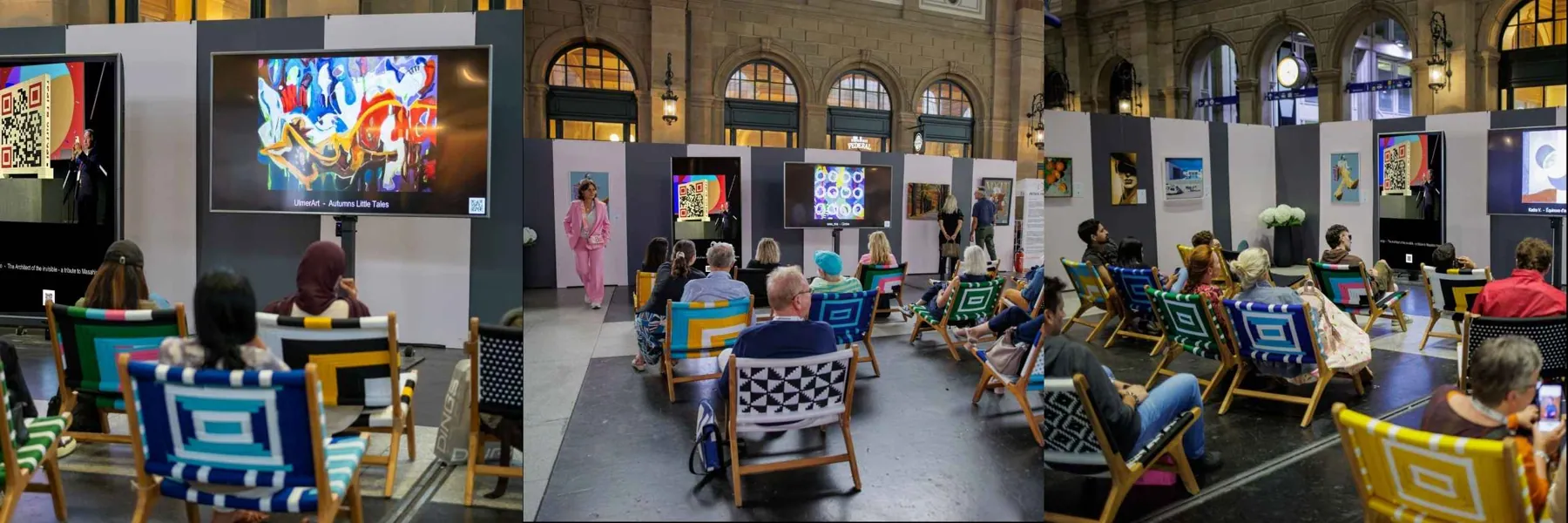
In Zurich, The Architect of the Invisible found a particular resonance. Installed in the Wannerhalle, beneath Niki de St. Phalle's emblematic sculpture, the work faced the daily flow of more than 80,000 passers-by. In this place of transit, qargo's LEGO® art took on a public dimension: accessible, open, immediately visible, yet carrying a critical message that invites people to slow down, to scan, to read and to reflect.
An international and critical journey
After Biarritz, Paris and Venice — where the work was among the finalists of the YICCA (Young International Contest of Contemporary Art) competition in June 2025 — the Zurich stage forms part of an international exhibition strategy. It precedes a tour of Asia, with presentations planned in Seoul and then Tokyo. Each place inflects the reading of the work: in France, it was part of the tribute to thirty years of the QR code; in Italy, it was recognised by a jury of international exhibition curators and curators; in Switzerland, it faced public space and the massive flow of travellers. These successive recontextualisations give the work a critical dimension: that of a piece in motion, constantly questioning its own reception.
A dialogue with curators, exhibition organisers and collectors
By presenting The Architect of the Invisible in varied settings — fairs, competitions, public exhibitions — qargo places his work in dialogue with all the players in the art world: exhibition curators, curators, art collectors. Each is invited to question the significance of this encounter between LEGO® and QR code, between inspiring figure and digital memory. The work is not conceived as a closed object, but as a vehicle of communication that opens up stories, extends legacies and questions our collective relationship to images and signs.
At the crossroads of material and code
With The Architect of the Invisible, qargo builds an original reflection on how LEGO® art can go beyond the register of play or design to become part of a critical form of writing. LEGO® becomes here a material of memory, at once rigid and modular, capable of giving form to contemporary thought. Facing it, the QR code embodies the language of the present, a simple yet universal code that makes it possible to preserve and to transmit. In Zurich, this articulation between material and code, between childhood and high technology, offered visitors an experience that was at once visual, tactile and narrative. A work that does not content itself with representing, but invites us to explore, to read and to extend the artistic gesture through the viewer's very act.