Interview: the artist qargo questioned by Tilipix
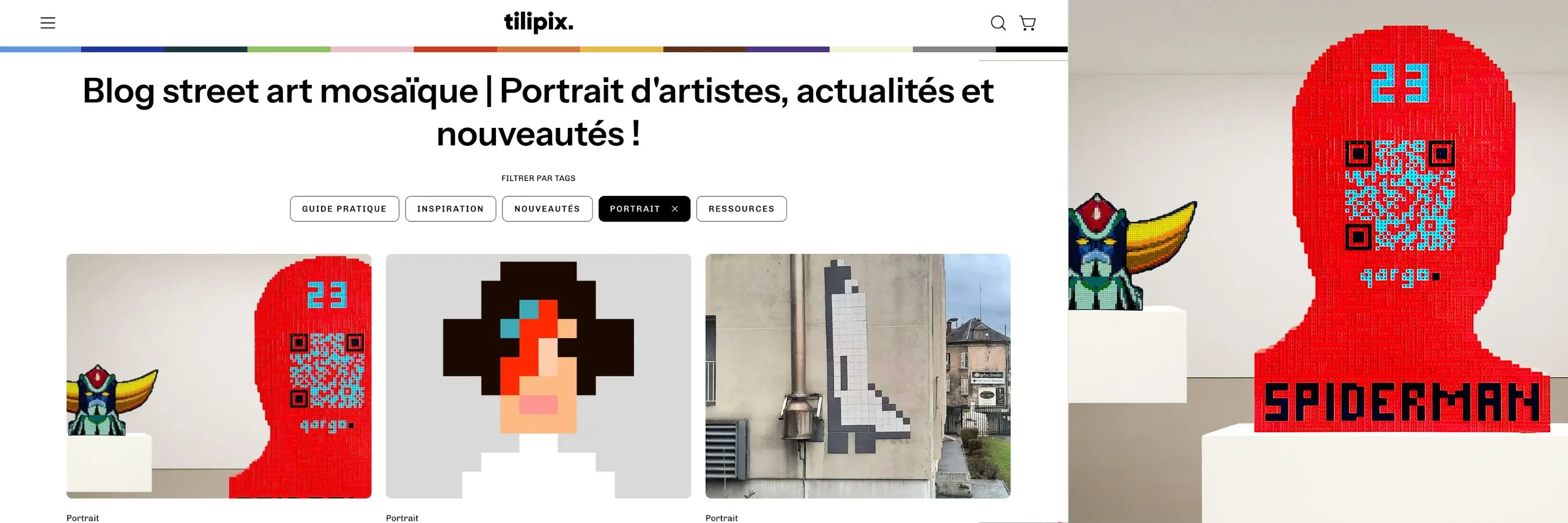
Hi qargo, can you tell us more about the person behind this pseudonym? And about the choice of name?
qargo was born from an overwhelming need to give new meaning to my path, by reconnecting artistic creation, emotional memory and intergenerational sharing. After an intense career in the startup world, I felt the need to return to a more essential, more direct, more embodied form of expression. The name qargo sums up my trajectory: QR code, Art, LEGO®. Three fundamental dimensions of my work. LEGO®, that universal, intergenerational toy, has become my exclusive artistic medium, a wonderful tool for transmission. The QR code, for its part, is not a mere technological element: it has become a narrative vector, an interactive gateway. Together, they have allowed me to invent a visual language that touches memory, emotion and meaning all at once.
What was your first encounter with urban art? What made you want to get into it?
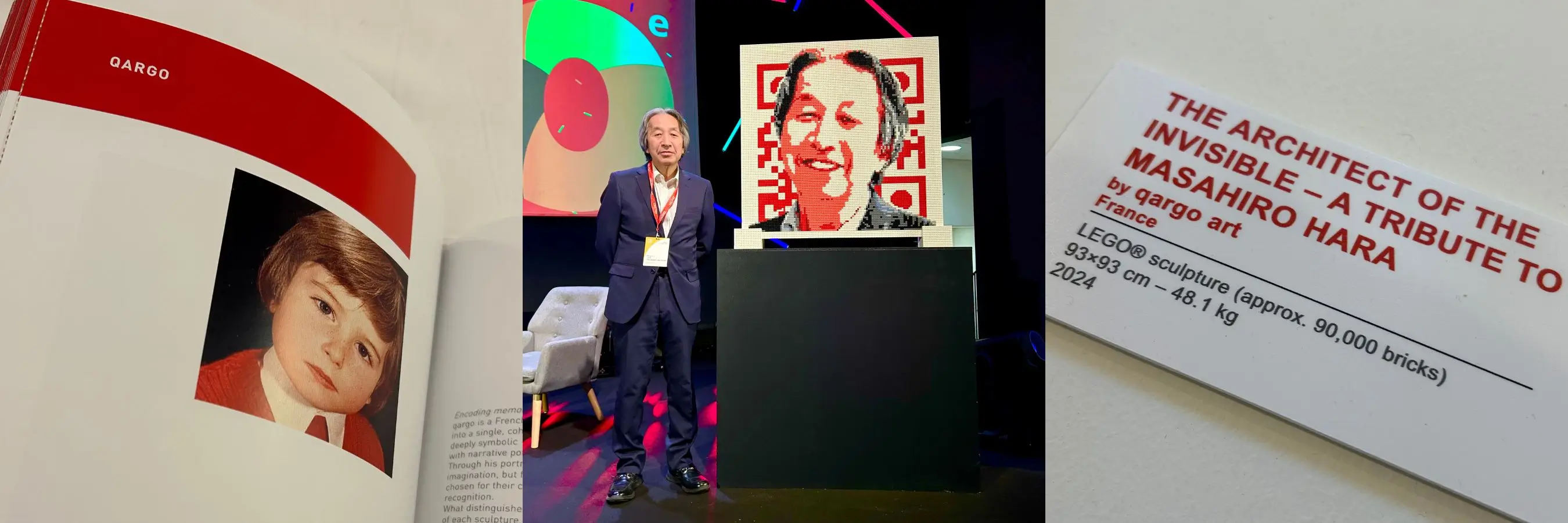
Urban art has always captivated me. It interrupts the flow, provokes the unexpected, opens up a field of emotion in the heart of everyday life. In 2019, while I was travelling in Asia, I came across a QR code used as a means of payment for the first time, in a Bangkok tower called Pixel Tower. It was a revelation. At that time, the QR code was still little known in Europe. Intrigued, I set out to find its origin, and that is how I discovered the exceptional career of its inventor, Masahiro Hara. A discreet but visionary figure, whom I regard as a contemporary Gutenberg. I then had an intuition: to create a QR code made entirely of LEGO®. Once this first experiment succeeded, I understood that I had found a new tool for transmission and storytelling. A work could now depict a person on one side and, via the QR code on the back, let people discover their story, their values, their impact. This idea overwhelmed me. It has never left me.
If you had to define your style in 3 words, what would they be?
Accessible. Narrative. Intergenerational. Accessible, because anyone can enter my works without barriers — LEGO® speaks to everyone, young and old. Narrative, because each creation tells a journey, reveals values, passes on a memory. Intergenerational, because my work is addressed to everyone, from those who grew up in the 80s to those who are discovering art today through digital media. The aim is to create a bridge between generations, by highlighting inspiring stories and universal figures.
Can you tell us more about your creative process?
Each work is born of an encounter: with a figure who inspires me, a character — real or fictional — whose values or journey resonate with me. I collect images, I study them, I look for the posture, the expression, the intensity that will best reveal the essence of that character. I build a bespoke visual, which I pixelate, colourise and rework until I obtain a representation faithful to my intention. Then comes the assembly phase: each LEGO® brick is placed by hand, one by one. A qargo work can contain from a few thousand to more than 100,000 bricks.
In parallel, I generate a unique QR code that links to a dedicated page on my website qargo.art. This page presents the work, its story, its technical characteristics, but also an original biography of the character depicted, written by me, as well as a text explaining the colours, the construction, and the reasons that guided my artistic choices. This is where the immersive dimension comes into its own: the physical work becomes a door to a broader story, a space for exploration.
What are your main sources of inspiration?
My childhood, without hesitation. I grew up in the 80s, lulled by the first consoles, pixelated video games, Japanese animated series. This visual culture shaped me. The pixel is more than a graphic language: it is a collective visual memory. Japan is a constant source of wonder, rigour, and understated poetry. And of course, meeting Masahiro Hara was decisive. It took me more than a year and a half to meet him, and when I was finally able to present him with a tribute work in Tokyo, something was sealed. A sincere friendship was born from that exchange. His humility inspires me deeply.
What is the ideal spot for you to exhibit your works?
I don't work in public space strictly speaking, but I am interested in all the places where art can meet the public. Galleries inspired by pop aesthetics, art centres focused on innovation, but also more unexpected places: learning centres, places of passage, open museums. The idea is to create an experience accessible to everyone, with no filter or elitism. LEGO® makes that possible. It eases access to art, awakens curiosity, triggers emotion.
Can you tell us about your first work?
My first work was dedicated to Masahiro Hara. I wanted to pay tribute to the man whose invention profoundly transformed the way we pass on information. I sculpted his portrait on one side and, on the back, I made a functioning QR code, entirely in LEGO®. This code links to a dedicated page tracing his journey, his values, his genius. Once the work was finished, I did everything I could to meet him. A year and a half later, in Tokyo, I gave him this creation. It was a very powerful moment. Since then, we have stayed in regular contact. It is a friendship born of an artistic gesture.
Where can we discover your works?
My creations have been or are being exhibited in several cities: Paris, Tokyo, Dubai, Biarritz, Honfleur, Aix-en-Provence, Val d’Isère, Monaco, Bangkok, Fontainebleau, Venice and Seoul.
Each place is an encounter. My ambition is to keep my qargo collection travelling, in France and internationally. I am particularly drawn to Asia, whose culture resonates with my approach.
How many works have you made?
To date, I have made around forty works. Some have never been made public, either because they seemed unfinished to me, or because they did not fully meet my aesthetic standards. Others have been exhibited in galleries, presented online on Artsy and Artmajeur, or acquired by collectors and art lovers who connect with my approach. Each work requires dozens, sometimes hundreds, of hours of work.
What is your favourite work?
It is hard to choose, because each work carries within it a part of my story and my convictions. But two creations hold a very special place in my journey.
The qargo work no. 22, inspired by Goldorak, is probably one of the most emblematic. I chose to depict only certain key elements — his face and his golden wings — in a stylised, semi-abstract composition, almost suspended. This deliberate cut-out accentuates the symbolic force of the character, as if he were about to burst out of space to defend humanity. The colours — midnight blue, intense red, sunlit yellow, metallic green — convey the radiant heroism and loyalty of this legendary robot who marked my childhood imagination. On the back, a LEGO® QR code invites people to rediscover this figure through an immersive digital experience. The work was signed by Masahiro Hara himself, which further strengthens its emotional and historical significance.
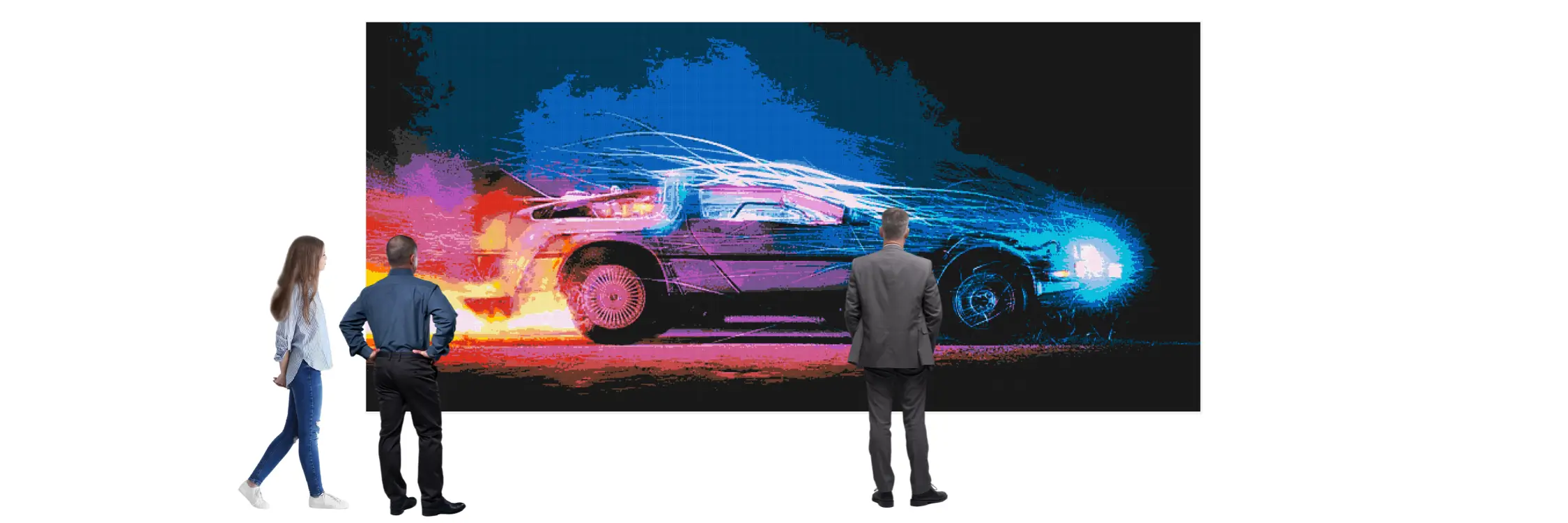
I am also very attached to the qargo work no. 5, dedicated to Doc Emmett Brown. It embodies visionary daring, free thinking, the ability to defy the laws of the possible. Through his exalted gaze, his dishevelled hair and the electric intensity of the colours used, this piece pays tribute to the power of imagination. The QR code on the back acts as a portal to a broader reflection on genius, science and the future. A nod to his famous unit of energy is hidden in it: 1.21 gigawatts. This work is a celebration of those who dare to invent tomorrow.
These two characters, one a warrior, the other a scientist, embody in my eyes different forms of courage and transmission. And that is precisely what I seek to offer through my sculptures: powerful visual stories, carried by figures who lift us up.
What are your artistic projects and your wishes for this year?
My next exhibition will take place this summer at the CICA museum, a unique cultural space in Gimpo, South Korea, dedicated to artistic experimentation. Asia holds a central place in my inspiration. I am also exploring exhibition possibilities in Tokyo, Hong Kong and Singapore. Wherever art can become a shared language. One of my projects would be to organise a new joint exhibition with Masahiro Hara, to bring our perspectives together on transmission, code and memory.
Your wildest dream?
To make a monumental work appear in public space: a giant QR code made entirely of LEGO®, paired with a portrait rich in meaning. A sculpture that would not merely be spectacular, but deeply meaningful — a signal, a landmark, a totem. Set in an emblematic location, it would embody at once a tribute to a significant figure, a celebration of transmission and an opening onto a narrative universe accessible to all.
More than a work, a tangible trace in the landscape, a reminder that modernity can also serve memory and the values that lift us up.
And finally, which artist would you like me to interview for the next portrait?
csrk.art, an artist whose work, visual energy and roots in our era I admire.